Custom Embedded Development for Smart Litter Boxes
Background
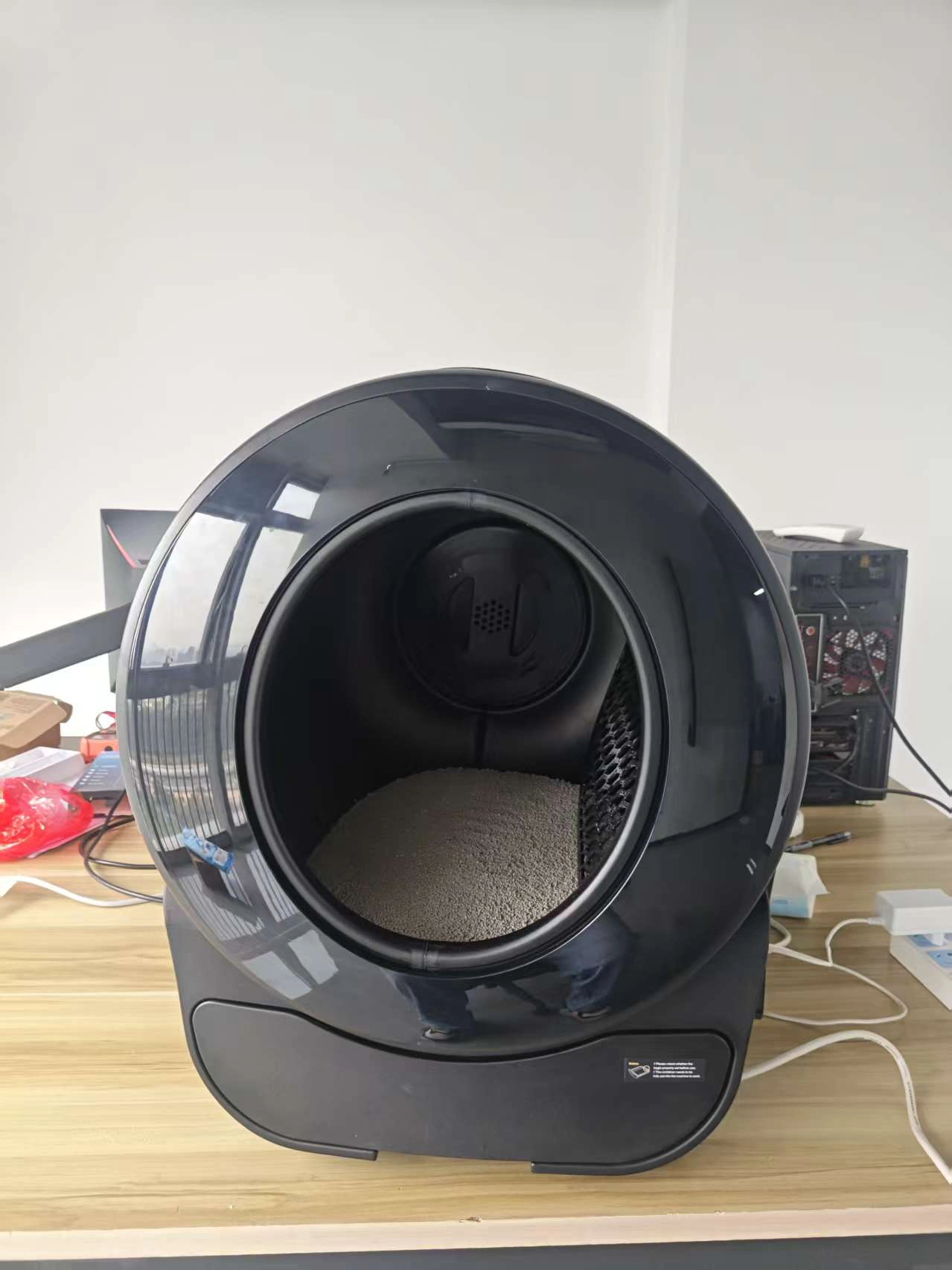
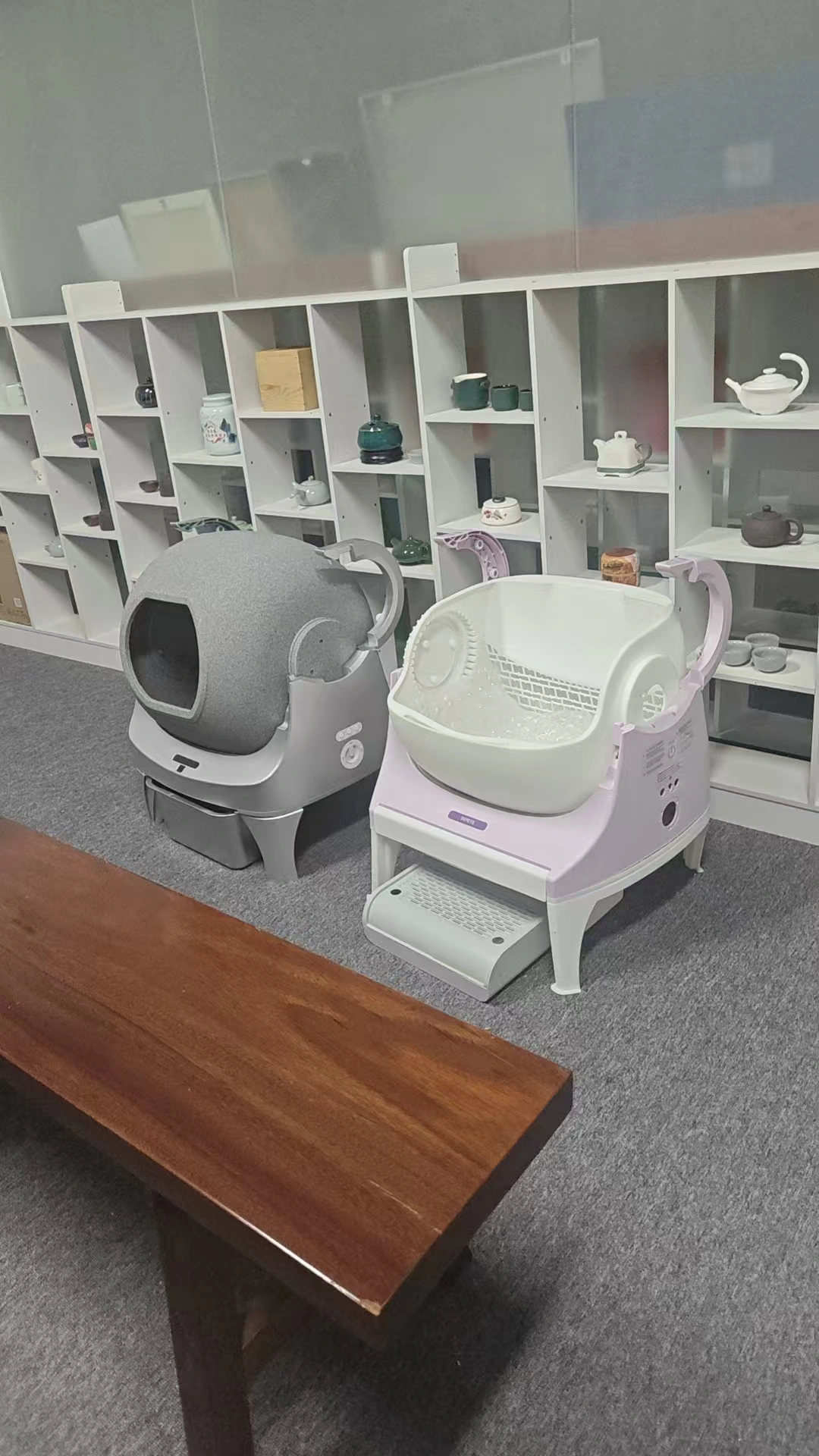
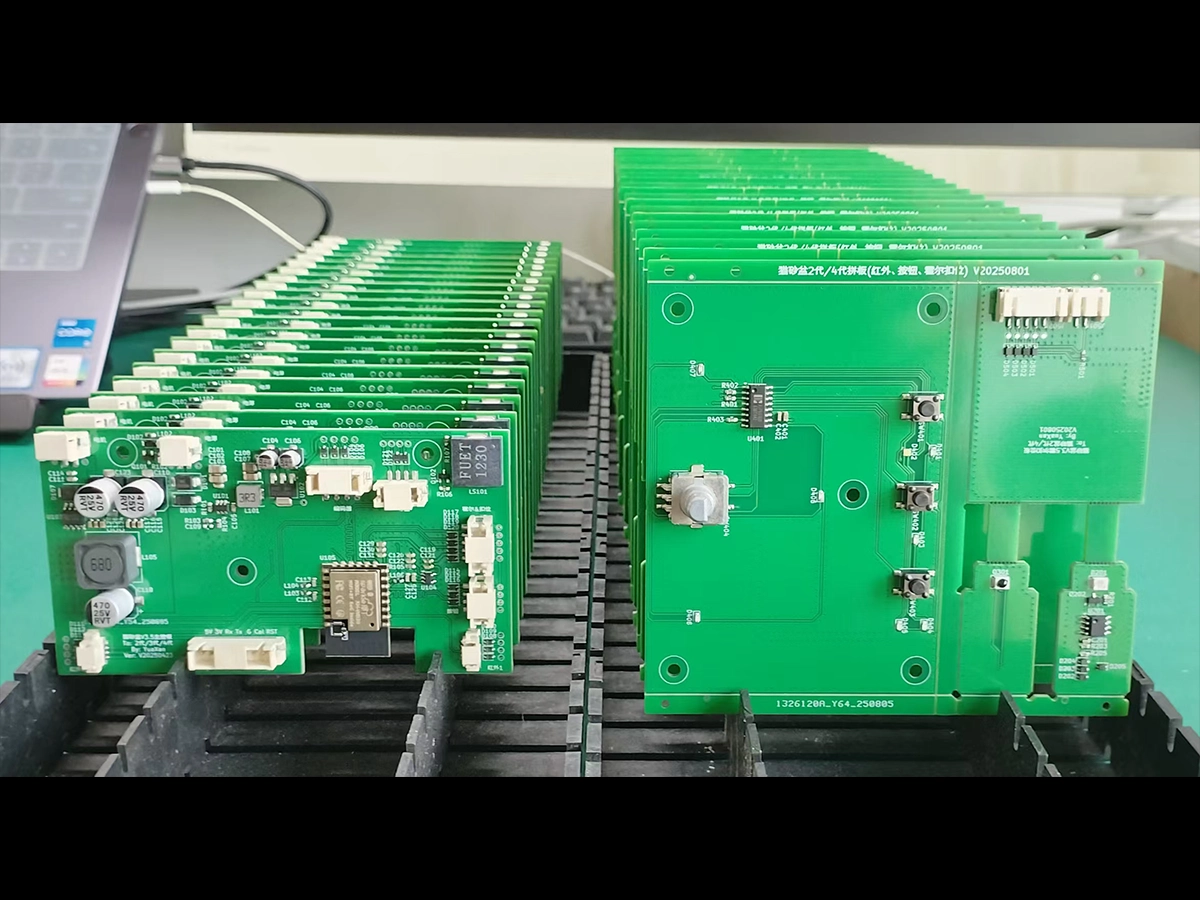
We provide custom embedded hardware and software development for smart litter boxes. Our scope covers schematic design, PCB layout, component selection, prototyping and debugging, as well as embedded firmware — drivers, application state machines, communication protocols, OTA and low-power management. The products support Wi-Fi connectivity with BLE provisioning, and the backend integrates through the JetLinks IoT platform.
Challenges
- Mechanism control and safety: the reset, cleaning, litter-levelling and waste-emptying actions require precise positioning while preventing injury to cats;
- Structure versus weighing: the early dual-weighing design placed excessive demands on structural rigidity, where slight plastic deformation affected accuracy;
- Motor noise affecting weighing: commutation noise and back-EMF from motor start/stop can couple into the weighing circuit and disturb weight readings;
- Connectivity experience: balancing provisioning success rate with automatic reconnection after network loss.
Solution
Main control and connectivity
A Wi-Fi + BLE combo module (BK7238) serves as both the main controller and the connectivity core — Wi-Fi for cloud connectivity and BLE for provisioning. The backend integrates through the JetLinks IoT platform.
Motor control and software positioning
A DC gear motor with an encoder is used, and the reset, cleaning, litter-levelling and waste-emptying actions are positioned by encoder counting instead of mechanical limit switches, reducing part count.
Anti-pinch and foreign-object detection
- Motor current ripple during an action is used to detect a possible pinch; the motor stops immediately and reverses 30° to release;
- Two pairs of infrared beam sensors quickly detect a cat or foreign object so the device does not operate in an abnormal state.
Weighing and interference suppression
The weighing design was simplified from dual weighing (whole unit + waste bin) to single weighing: dual weighing demands very high structural rigidity and assembly consistency, where plastic deformation directly causes measurement error; single weighing offers a better balance between reliability and cost.
To suppress motor interference with weighing:
- The motor supply uses an LC π-filter network with a Schottky diode to absorb back-EMF and suppress commutation noise;
- The motor and weighing circuits are grounded together through a ferrite bead, preventing the motor current loop from disturbing the weighing signal;
- The weighing board is powered through a ferrite bead plus a dedicated LDO, further isolating motor interference from weight measurement.
Firmware and production support
- Firmware covers drivers, application state machines, communication protocols, OTA and low-power management, with automatic reconnection after network loss;
- OTA uses the full-image upgrade mechanism provided by the SDK;
- A test fixture and SN programming tool are provided, together with an outgoing-test checklist.
Application Value
- Approximately 4,500 units mass produced;
- Software positioning replaces some mechanical limit switches, reducing part count and assembly complexity;
- Current-based detection plus infrared beams provide dual protection for safety;
- OTA support allows after-sales issues to be resolved through firmware updates.